+65 97307760, +65 84206285

Industrial automation uses control systems, software, and smart devices to run industrial processes with minimal human intervention, improving efficiency, quality, and safety.
Industrial automation is the use of technologies such as PLCs, sensors, robotics, and industrial software to monitor and control machinery and production lines automatically. These systems replace or support manual operations so factories can produce more consistently, faster, and with fewer errors.
Key components
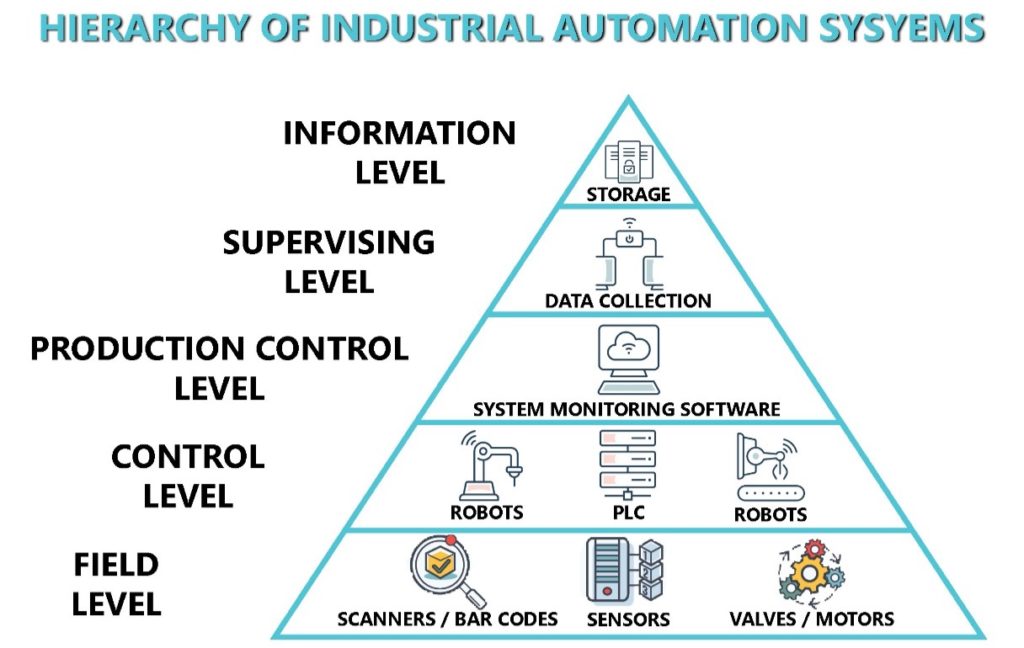
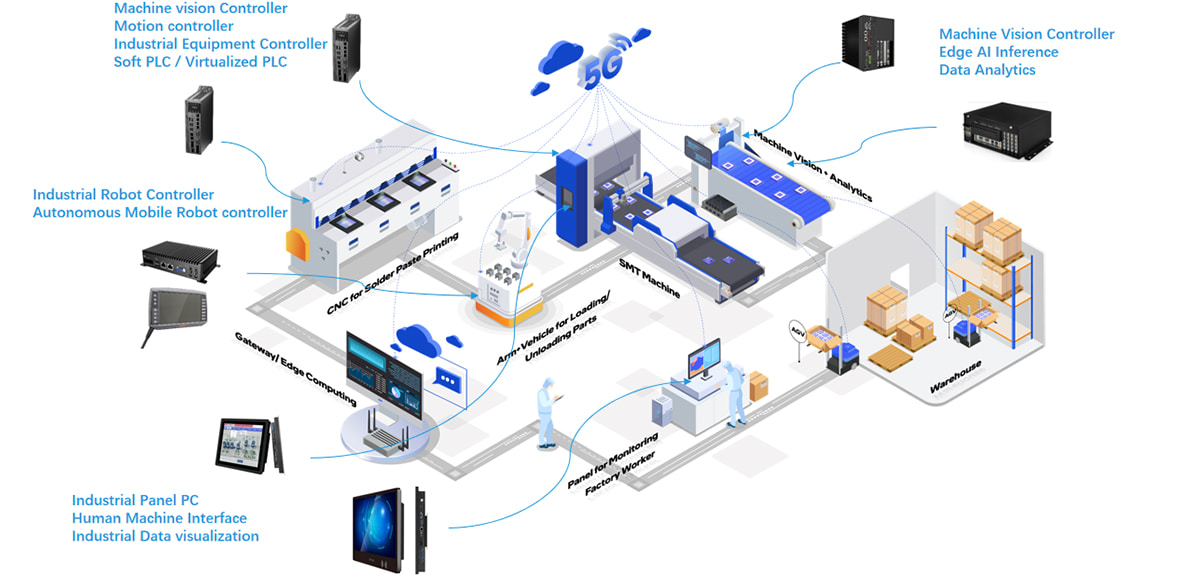
Controllers: PLCs, PACs, and industrial PCs execute control logic for machines and lines.
Sensors & actuators: Measure temperature, pressure, position, etc., and move mechanical parts accordingly.
Robotics: Fixed robots and collaborative robots (cobots) perform tasks like welding, assembly, and packaging.
Industrial networks: Fieldbuses and Ethernet-based networks connect devices for real-time communication.
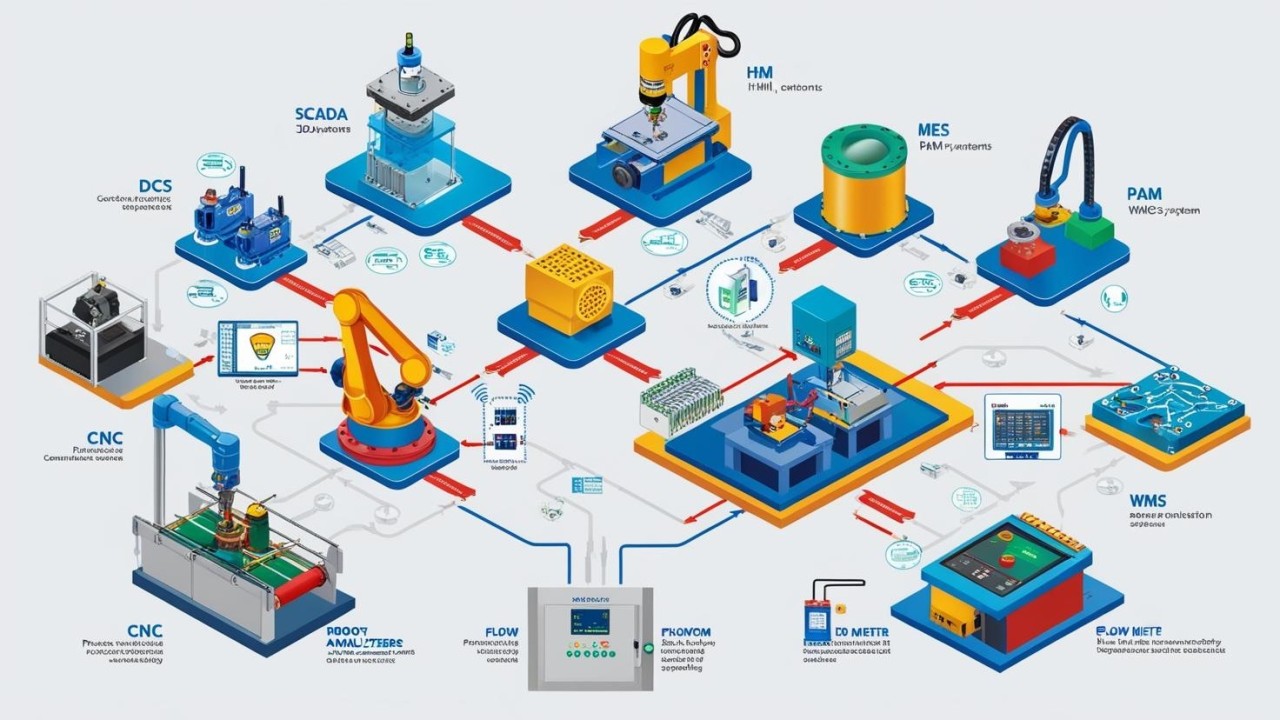
SCADA/MES software: Supervises processes, gathers data, and integrates production with business systems.
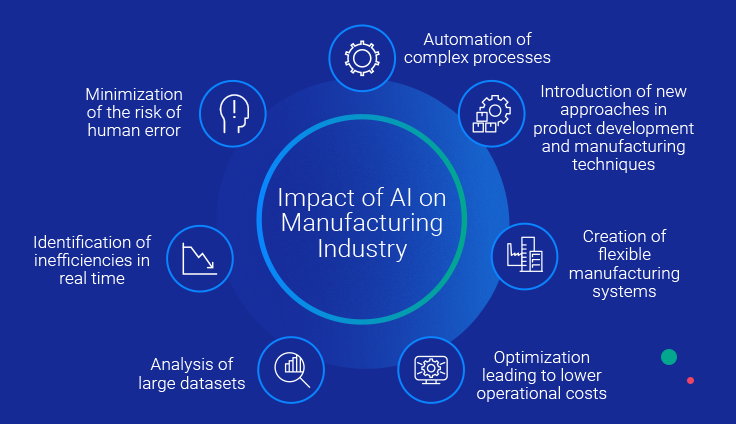
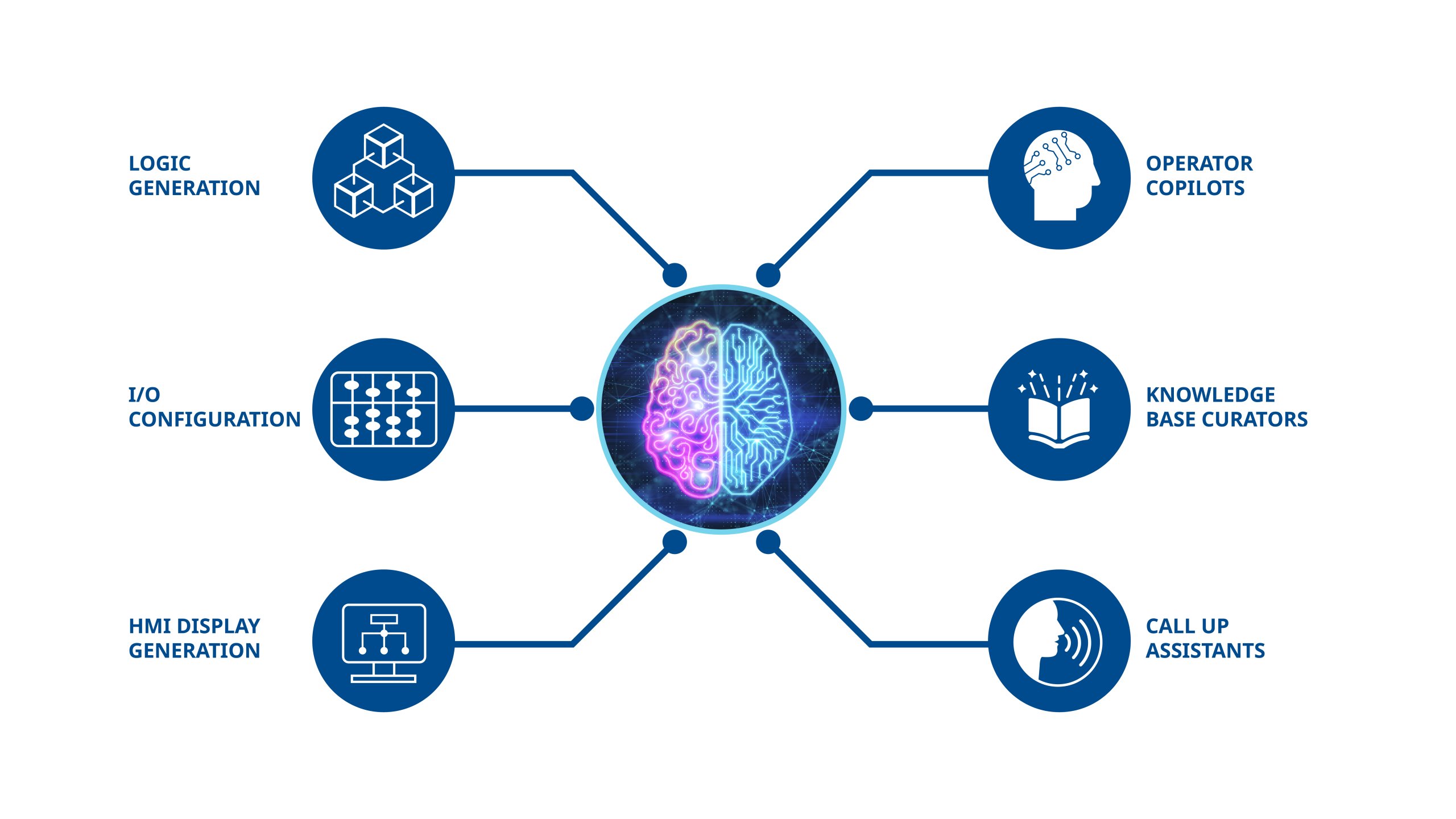
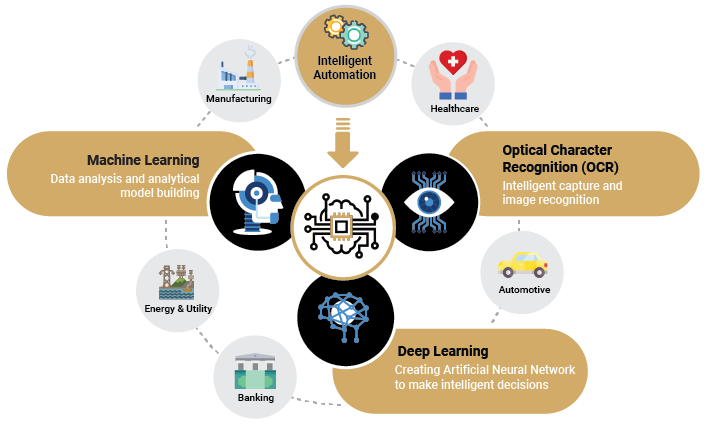
AI-driven optimization: Systems use data and machine learning to reduce downtime, improve quality, and predict failures.
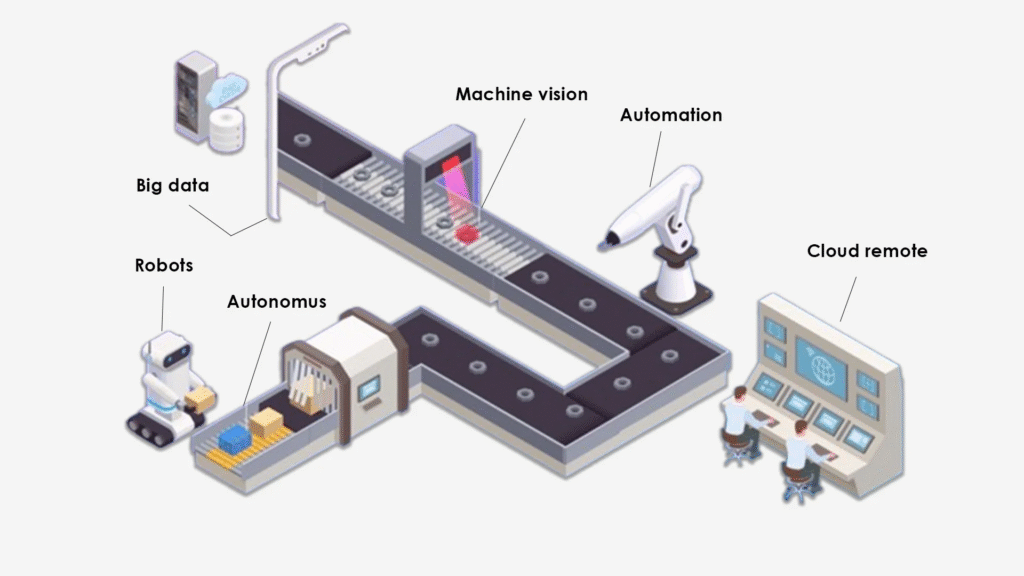
IIoT and connectivity: Connected sensors and machines provide real-time visibility and remote monitoring.
Collaborative robotics: Cobots safely work alongside people to increase flexibility in assembly and material handling.
Digital twins: Virtual models of equipment or plants help simulate, test, and optimize before applying changes in the real world.
Smart, sustainable manufacturing: Automation helps cut waste, energy use, and rework, supporting ESG and green goals
Smarter Machines, Tailored to Your Needs
What sets our machines apart is their intelligence—they adapt to your organization’s unique requirements, continuously optimizing to meet them. CIOT delivers comprehensive industrial automation services that monitor machinery activity, performance, and health in real-time. We enable seamless communication across diverse technologies, ensuring your systems work in harmony.
End-to-End Support
From strategic planning and expert installation to reliable operation and ongoing maintenance, CIOT empowers your automated operations for maximum uptime and efficiency. Transform your production with solutions that predict issues, boost output, and drive sustainable growth. Contact us today to get started.
Process & Performance Optimization uses data analytics, automation, and lean techniques to streamline industrial workflows, cutting waste and boosting output.
How It Works
Real-time monitoring via IIoT and AI identifies bottlenecks, while methods like Six Sigma (DMAIC) and Lean (value stream mapping) drive targeted improvements. Digital twins simulate changes for risk-free optimization.
Key Benefits
• Higher Throughput: Up to 25% faster production by eliminating inefficiencies.
• Waste Reduction: Lean tools cut overproduction, waiting, and excess motion.
• Quality Gains: Six Sigma minimizes defects for consistent results.
• Cost Efficiency: Predictive insights lower energy and resource use.
CIOT Services
CIOT tailors optimization with custom audits, automation upgrades, and performance dashboards for your Singapore operations—maximizing ROI fast. Contact us for a free assessment.
Predictive maintenance leverages sensors, AI, and analytics to predict equipment failures, slashing downtime in industrial automation.
Sensors track vibration, temperature, and metrics. AI analyzes data to forecast issues, enabling planned repairs.
Sensors on machinery monitor vibration, temperature, and performance metrics continuously. Machine learning algorithms analyze this data against historical patterns to predict issues, scheduling repairs during planned downtime rather than emergencies. This proactive approach integrates with IIoT platforms for seamless alerts and dashboards.
Less Downtime: Up to 30% higher uptime by averting breakdowns.
Cost Cuts: 20%+ savings via targeted fixes.avoiding unnecessary overhauls and emergency fixes
Longer Life: Early action extends equipment durability. Early interventions stop minor issues from escalating, prolonging asset lifespan and deferring replacements.[
Safer Ops: Spots hazards proactively. Detects hazards like overheating early, reducing accident risks and enhancing worker protection.
CIOT deploys custom predictive systems for real-time health monitoring and insights, boosting your facility’s efficiency. Contact us for a demo.
Decentralized systems distribute control across multiple local nodes, reducing wiring, enhancing flexibility, and boosting reliability in industrial automation.
How It Works
Local controllers like IP67 I/O modules and edge PLCs handle tasks near machinery, connected via fieldbus or Ethernet. This shifts logic from central cabinets to the field, enabling modular setups and real-time decisions.
Key Benefits
• Less Wiring: Cuts cabling by up to 70%, speeding installation and lowering costs.
• Higher Reliability: No single failure point; one node down doesn’t halt the system.
• Scalability: Easily add modules without overhauling central infrastructure.
• Flexibility: Adapts quickly to production changes or expansions.
CIOT Services
CIOT designs decentralized solutions with intelligent valves, drives, and IIoT nodes for your Singapore plant—delivering agile, future-proof automation. Contact us for a consultation.
Get prompt responses from a friendly, professional and knowledgable support team.
Automation offers key benefits like boosting efficiency, cutting costs, and minimizing errors in repetitive tasks. Businesses adopt it to enhance productivity and scalability across operations. These advantages make it a strategic choice for modern organizations.
Efficiency Gains
Automation handles routine tasks such as data entry and reporting, freeing employees for strategic work. It operates continuously without breaks, increasing output capacity. This shift improves overall workflow speed and reduces bottlenecks.
Cost Reductions
By minimizing manual labor needs, automation lowers operational expenses over time. It cuts rework from human errors, saving resources on corrections. Long-term savings scale with business growth without proportional staff increases.
Quality Improvements
Automated processes ensure consistency by following precise rules every time. They eliminate fatigue-related mistakes, enhancing accuracy in outputs like manufacturing or data handling. Real-time monitoring further supports better quality control.
Additional Benefits
• Boosts employee satisfaction by removing mundane work, allowing focus on creative tasks.[1]
• Enhances safety in hazardous operations through machine handling.
• Provides competitive edge via faster decisions and adaptability.
No, automated systems are not always better or safer than manual ones. While they excel in reducing human error and handling hazardous tasks, they introduce new risks like system failures and overreliance. Proper implementation and oversight are essential to maximize benefits.
Safety Benefits
Automation removes workers from dangerous environments, such as heavy lifting or toxic exposure, lowering injury rates from fatigue or repetitive strain. It ensures consistent operations without human mistakes, like in welding or material handling, and includes sensors for obstacle detection. Predictive monitoring via AI further prevents accidents by spotting issues early.
Key Risks
Overreliance on automation can diminish workers’ situational awareness and manual skills, leading to errors during failures or emergencies. Complex integrations increase vulnerability to breakdowns or cyberattacks, potentially compromising safety. Human-machine interactions also require strict protocols to avoid collisions or new hazards.
Mitigation Strategies
Conduct thorough risk assessments before deployment and maintain regular training to preserve human competencies. Adhere to standards like those from OSHA or NFPA for safe design and use controlled access systems. Balance automation with human oversight to address both benefits and drawbacks effectively.
No, automated systems are not universally superior across all industries, but many sectors gain significant advantages from them. Key beneficiaries include manufacturing, logistics, healthcare, and retail, where automation boosts efficiency, safety, and scalability. Implementation success depends on the specific processes and challenges within each field.
Manufacturing
Robotic assembly lines handle precision tasks like welding and painting in automotive and electronics production, reducing errors and increasing speed. Predictive maintenance minimizes downtime, while quality inspections ensure consistency. This sector leads in automation adoption due to high-volume, repetitive operations.
Logistics and Supply Chain
Automation optimizes inventory tracking, route planning, and warehouse operations with robots and AI-driven systems. It cuts delivery times and labor costs in e-commerce fulfillment. Real-time data from scanners and AGVs enhances accuracy during peak demands.[2][4][8]
Healthcare and Pharmaceuticals
Automated drug formulation, packaging, and diagnostics reduce contamination risks and ensure regulatory compliance. Robotic systems handle sterile tasks, speeding up production while maintaining hygiene. AI aids in patient monitoring and administrative processes.
Retail and Food & Beverage
Self-checkout, inventory management, and personalized marketing streamline customer experiences. Automated filling lines in food production boost hygiene and throughput. E-commerce giants use it for order processing and stock replenishment.
Other Notable Industries
• Energy (Oil & Gas, Water): Monitors hazardous processes and optimizes resource use.
• Finance: Speeds transactions and fraud detection.
• Agriculture: Improves harvesting and supply prediction.
Timelines for implementing automated systems vary widely based on project complexity, customization, and industry needs. Simple setups might take 3-6 months, while complex industrial projects often span 12-24 months or more. CIOT Energy emphasizes tailored Front-End Engineering Design to provide precise budgets and schedules upfront.
Typical Project Stages
Automation rollout follows structured phases: assessment and planning (8-12 weeks), design and engineering (8-24 weeks), procurement and installation (4-12 weeks), commissioning and testing (6-24 weeks), and training/optimization (4-8 weeks). Each stage builds on the previous, with overlaps possible for efficiency. Total duration depends on factors like integration with legacy systems and supply chain delays.
Influencing Factors
Project scope and customization extend timelines, especially for unique demands. Regulatory compliance and stakeholder alignment add weeks or months. Vendor lead times for components like robotics or conveyors can range from 7-24 weeks.
CIOT Energy Approach
CIOT treats projects as unique, using Front-End Engineering Design for information-based timelines before work starts. This ensures transparency at every step, aligning with your specific needs. Contact our team for a customized quote.CLICK HERE
Industrial automation platforms integrate into existing plant systems through standardized protocols, modular hardware, and phased software mapping to minimize disruptions. This ensures compatibility with legacy equipment like PLCs and SCADA while enabling data flow to modern MES or ERP systems. Success relies on detailed assessments and expert system integrators.
Integration Methods
Platforms use open standards such as OPC UA, Modbus, and MQTT to bridge old and new systems, allowing seamless communication between sensors, robots, and controllers. Gateways and IIoT devices handle proprietary protocols, converting data for unified access without full replacements. Phased rollouts test connectivity in pilots before full deployment.
Key Steps
• Assessment: Map current infrastructure, identifying interfaces and data needs.
• Design: Create layered architecture with hardware (PLCs, HMIs), software, and networks for scalability.
• Implementation: Install incrementally, commission with calibration, and train staff.
• Testing: Verify interoperability and security before go-live.
Challenges and Solutions
Legacy compatibility issues arise from outdated protocols, resolved via adapters and middleware. Downtime risks decrease with modular upgrades and real-time monitoring. CIOT Energy’s Front-End Engineering Design customizes this for your plant, providing clear timelines
No, automating processes will not make your employees obsolete. Automation typically handles repetitive, rule-based tasks, freeing workers for higher-value roles like oversight, problem-solving, and innovation. While some routine jobs may shift, new opportunities arise in system management, maintenance, and strategic planning.
Automation takes over repetitive tasks, freeing up employees to focus on higher-value work. Most plants combine automated and non-automated systems, managed by a team. Your employees will work with and manage the new system, making work easier and more efficient – not redundant.
Job Displacement Realities
Automation has displaced certain manufacturing roles, with 1.7 million U.S. jobs lost since 2000 due to robots, primarily in repetitive assembly. However, studies show net job creation: by 2022, automation eliminated 75 million positions globally but generated 133 million new ones. Manufacturing robots replace about 1.6 workers each, but displaced staff often transition to growing sectors.
Skill Evolution Benefits
Employees gain from upskilling in AI monitoring, data analysis, and customization, roles projected to grow as automation expands. Companies using tools like ChatGPT report augmentation over full replacement, with 40% expecting workforce reductions in automatable tasks but overall employment stability. Retraining programs ensure workers adapt, turning potential obsolescence into career advancement.
Strategic Implementation
Phased automation with training preserves human expertise for complex decisions automation cannot replicate. CIOT Energy’s tailored projects emphasize employee integration, aligning tech with your team’s strengths for sustained productivity. Proactive reskilling minimizes risks and maximizes gains.
Common features include sensors for data collection, PLCs for control logic, and HMIs for interaction, all integrated via robust networks. These enable precise, scalable automation tailored to plants like yours.
Sensing and Actuation
Sensors monitor variables like temperature, pressure, and position, feeding real-time data to the system. Actuators—electric, pneumatic, or hydraulic—execute commands, such as moving parts or opening valves, forming a closed-loop feedback mechanism.
Control and Interfaces
Programmable Logic Controllers (PLCs) process inputs, apply logic, and output signals reliably in harsh environments. Human-Machine Interfaces (HMIs) offer graphical dashboards for monitoring, alarms, and control.
Connectivity and Supervision
Networks using protocols like Ethernet/IP, Modbus, and OPC UA ensure seamless device communication. SCADA systems provide plant-wide oversight, data logging, and remote access.
Safety and Power
Integrated safety features like emergency stops and redundant controls protect workers. Reliable power supplies with backups maintain uptime. CIOT Energy customizes these via Front-End Engineering Design for your setup
Expert independent energy and IoT consultants that implement customised client solutions in the areas of Energy Management – Metering and Software and IoT – Asset Management.

© 2025 CIOT Energy Pte. Ltd.